




Grey vs White Customs Clearance in Russia: Core Differences Explained
Published on:2026-06-30
During the development of China-Russia cross-border trade, customs clearance mode is a core factor determining the legality and stability of cargo circulation. Russian customs systems fall into two mainstream channels: white clearance and grey clearance, which have fundamental disparities in compliance standards, operating logic and risk levels. With years of frontline experience in China-Russia cross-border logistics and customs services, Bixi Trading analyzes the core characteristics and gaps between the two modes, providing compliance references for foreign trade enterprises expanding into the Russian market.
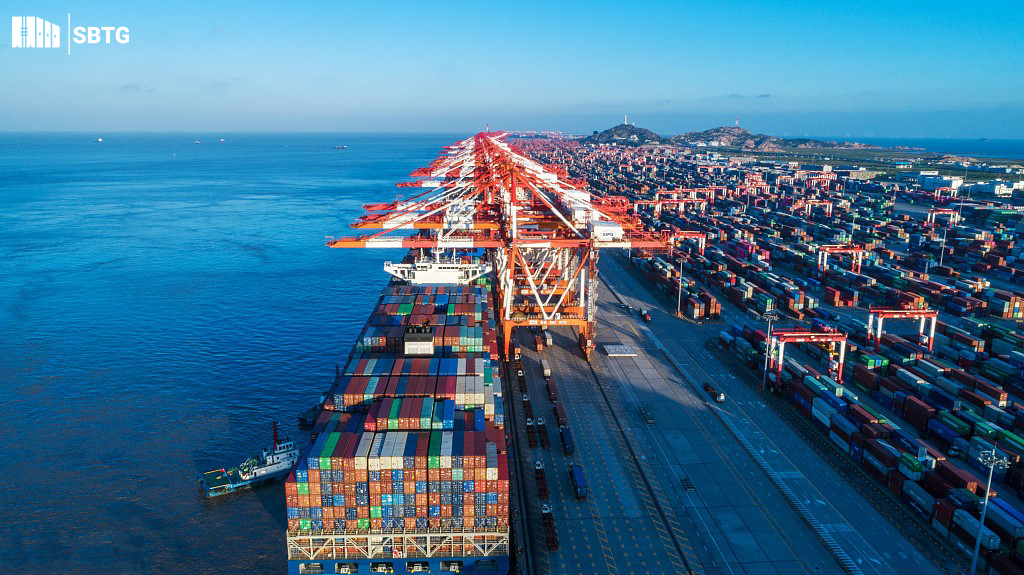
I. White Customs Clearance: Official Legal Import Channel of Russia
White customs clearance refers to formal import procedures recognized and protected under the Russian Customs Code. It serves as the compliant mainstream channel for China-Russia cross-border trade. The whole clearance process is fully transparent, relying on complete trade documents and standardized declaration workflows to complete customs inspection and release.
Standard Operation Rules
Prior to cargo arrival at ports, enterprises must prepare a full set of documents including product materials, technical parameters and packing lists. Accurate TN VED commodity codes are matched based on genuine cargo information; cargo value is confirmed per Russian customs standards, and all applicable duties and VAT are paid in full according to law. Declarants may choose licensed customs brokers or legally registered Russian entities. All official paperwork such as GTD customs declarations, tax payment certificates, quarantine certificates and certificates of origin must be retained for full record-keeping.
This clearance model is compatible with all mainstream transport solutions including rail, sea-rail intermodal, ocean freight and air shipping, supporting delivery coverage across all eastern, western and inland regions of Russia. Clearance is split into preliminary inspection and formal processing phases, with mandatory pre-screening for animal & plant quarantine and ecological testing. The full logistics chain is traceable, and goods obtain legal circulation rights within Russia after release.
Formal white clearance mandates complete registration and labeling under the Mark of Honesty system. Bixi Trading operates dedicated pre-labeling warehouses at Beliy Rast and Selyatino to finish all marking procedures before customs filing. By contrast, grey clearance cannot complete legal Mark of Honesty registration, leaving goods without valid market access credentials and vulnerable to seizure during routine market inspections. Enterprises are advised to partner with formal logistics providers offering in-warehouse labeling plus rail & air multimodal transport services.
II. Grey Customs Clearance: Non-Compliant Expedited Import Channel
Grey clearance is an informal import practice derived from China-Russia cross-border trade, featuring simplified workflows and covert operations. Cargo may pass legitimate outbound inspection in China, but customs handling at Russian border ports is outsourced to unregulated local intermediaries.
Operational Mechanisms
These intermediaries arbitrarily alter declared product categories and quantities on shipping documents, skipping parts of official safety and inspection procedures to shorten clearance lead times. Its only apparent advantages lie in faster processing and lower entry barriers, only suitable for emergency one-off shipments.
Critical Compliance Defect
Since declared data fails to match actual goods, grey clearance cannot generate complete legal customs declarations and tax receipts. While cargo departs China legally, it has no official filing records upon entering Russia. Goods face constant seizure risks during domestic regulatory spot checks, and enterprises may be unable to retrieve shipments normally. The legitimate interests of shippers are not protected under Russian law. This practice also exists in certain other cross-border trade routes beyond China-Russia.
III. Core Differences Between White and Grey Customs Clearance
The two clearance modes differ drastically across four critical dimensions: compliance, risk exposure, transit time and comprehensive cost, which form the primary criteria for enterprise selection.
- Compliance PerspectiveWhite clearance fully complies with Russian customs laws, with authentic declarations and complete documentation granting goods legal nationwide sales eligibility. Grey clearance submits falsified information and lacks statutory import paperwork, operating on the fringes of legal regulation.
- Risk PerspectiveEvery step of white clearance is traceable; trade disputes can be resolved via official authorities supported by legal documentation. Grey clearance has no official filing records, exposing cargo to permanent seizure risks with no legal recourse for financial losses.
- Lead Time & Cost PerspectiveWhite clearance adopts standardized inspection procedures with predictable clearance cycles, and legal tax burdens for general commodities remain reasonable. Grey clearance shortens formalities and lowers upfront fees, yet carries massive hidden financial risks.
IV. Guidance on Selecting Import Clearance Modes for Russian Trade
For enterprises pursuing long-term market presence and sustained bilateral cooperation, white clearance is the secure option. Complete compliant documentation enables cooperation with offline supermarkets, long-term distributors and mass retail stocking, sustaining stable trade operations.
Grey clearance only fits temporary ad-hoc shipments and cannot support regular large-scale cross-border trade. Shipments using grey clearance are continuously targeted by Russian regulatory crackdowns, hindering long-term overseas market expansion plans.
Bixi Trading maintains up-to-date insights into Russian customs policy revisions and clearance provisions. We design customized compliant clearance schemes tailored to clients’ cargo types, transport modes and trade cycles to eliminate cross-border compliance risks and guarantee smooth, legal cargo circulation in Russia.
Frequently Asked Questions
Q1: Can white clearance completely eliminate cargo seizure risks in Russia?A1: If declarations are truthful, all duties fully paid and all inspection certificates complete in strict accordance with Russian laws, the full legal logistics chain will avoid detention risks, and all corporate rights are protected by Russian legislation.
Q2: Does white clearance always incur higher tax costs than grey clearance?A2: Tax amounts depend on commodity categories and applicable tariff brackets. For most regular goods, the upfront cost gap between white and grey clearance is minimal, while white clearance avoids huge subsequent loss risks for more controllable total expenditures.
Q3: Is white clearance inherently slower for customs processing?A3 Clearance speed depends on cargo type, shipment batch and port throughput. Homogeneous standard goods enjoy smooth, predictable white clearance workflows with orderly official inspections.
- Tags
- None
Related Articles
-
How to Combine Customs Clearance & Transit Services for High‑Frequency Shipments to Russia? Custom‑Optimized Solutions by Bixi Trading
As business volumes targeting Russia expand, many foreign‑trade enterprises enter a phase of high‑frequency shipments. Characterized by numerous batches, scattered destinations and mixed commodity types, such operations impose higher adaptability requirements on customs‑clearance and transit services. Conventional standardized services can hardly match the rhythm and efficiency demands of frequent shipments, so enterprises require customized combined […]
2026-08-21 -
What Value‑Added Services Do Russia‑Focused Freight Forwarders Provide? Systematic Overview by Bixi Trading
China‑Russia cross‑border trade keeps deepening. Foreign‑trade enterprises’ logistics demands for Russia‑bound shipments have evolved from basic transportation to full‑dimension end‑to‑end support. Most Russia‑specialized freight forwarders on the market only deliver standardized transportation and customs‑clearance services, which fail to satisfy enterprises’ diversified operational requirements. Tatyana Kulyabina, General Manager of Huoding Finance Freight Agency and Founder of […]
2026-08-21 -

What Are the Core Advantages of Russia‑Bound Services Offered by Shanghai‑Based International Logistics Companies? In‑Depth Analysis by Bixi Trading
As a core domestic hub for cross‑border logistics, Shanghai hosts a large number of logistics providers offering Russia‑route services. Shanghai international logistics companies differ in business focus and capability sets; enterprises specialized in this vertical segment usually possess more prominent core competitive strengths. Tatyana Kulyabina, General Manager of Huoding Finance Freight Agency and Founder of […]
2026-08-20