


Russia Customs Rules November 2026: Higher Duties, Electronic Inspections and Stricter Marking
Published on:2026-11-05
November 2026 brings a cluster of new Russia customs rules that shippers from China should not miss. From 1 November, the Eurasian Economic Union (EAEU) raised import duties on several product groups, and Chestny ZNAK, Russia's product marking system, tightened tracking for vegetable oils and dairy. From 20 November, customs inspections move fully into an electronic workflow with strict 30-minute deadlines.
Each change affects landed cost, clearance time or whether goods can be sold in Russia at all. Here is what changed, what it means for your next shipment, and what to do now.
1. Higher EAEU import duties from 1 November
According to the Russian customs news service TKS.ru, two decisions of the Eurasian Economic Commission (Council Decision No. 110 of 9 September 2026 and Board Decision No. 131 of 21 September 2026) changed import duty rates in the EAEU Common Customs Tariff from 1 November 2026. The product groups named include:
- certain outerwear, including coats;
- special underwater and medical cameras;
- some shut-off valves;
- some timber;
- protective headwear such as helmets;
- pneumatic lifts and conveyors;
- vending machines;
- certain radio receivers.
For some tariff lines the higher rates apply until 30 September 2027 inclusive. Within each group, the rate depends on the exact HS code, so the decisions themselves and the EAEU tariff are the reference for your product.

Check HS codes and current rates before shipping and recalculate landed cost
What it means for you: if your goods fall into one of these groups, your Russian buyer's landed cost may rise, and existing quotes and contract prices may need to be recalculated. Unclear classification or vague product descriptions can also lead to additional duty claims or inspections. See our Russian customs clearance service.
2. Electronic customs inspections from 20 November
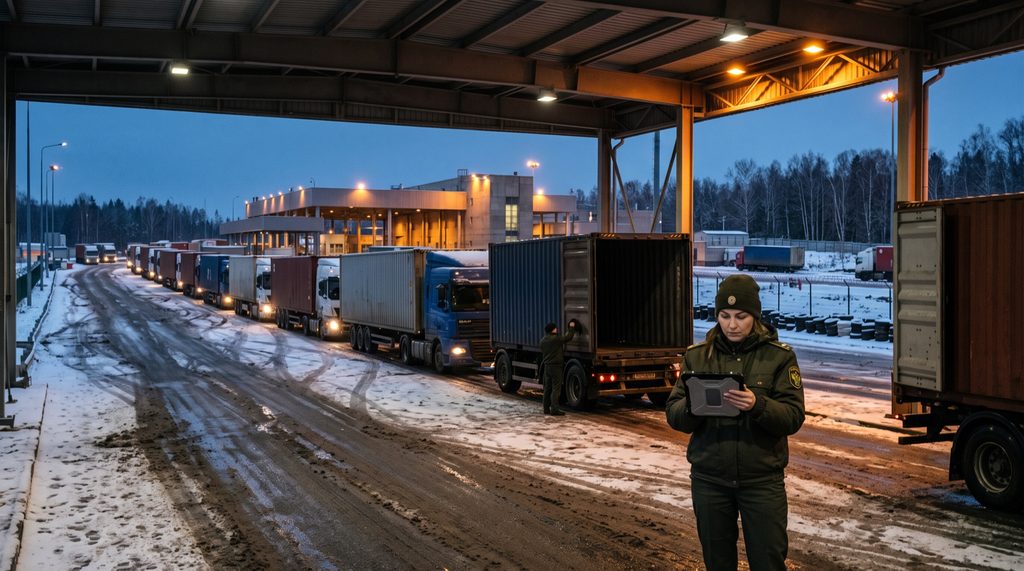
Under Russian Finance Ministry Order No. 51n of 21 April 2026, a new procedure for customs inspection (таможенный осмотр, an external examination without opening the packaging) applies from 20 November 2026. It covers almost all goods crossing the border, except international post, goods for personal use and ship or aircraft supplies. Three things change:
30 minutes to raise a notice: a customs officer who decides an inspection is needed must create a notice in the customs IT system (EAIS TO) within 30 minutes.
30 minutes to inform you: the customs office holding the goods must then tell the declarant or carrier the time and place of the inspection through EAIS TO within 30 minutes.
Electronic, final record: the result is an electronic inspection record, signed online, which cannot be changed once the inspection has ended.
What it means for you: inspections become faster and more formal. But the declarant, carrier and broker must be reachable in the system. If nobody responds or signs in time, cargo can sit at the border or in a customs zone, adding storage costs and delays.
3. Chestny ZNAK: item-level tracking for oils, batch tracking for dairy
Vegetable oils: from 1 November 2026, every transfer or withdrawal from circulation outside retail must report the marking code of each unit, not just the product code and quantity (Government Resolution No. 676). Oils produced up to 31 October 2026 may stay on the old volume-based accounting until their shelf life ends.
Dairy: marked dairy products with a shelf life over 40 days must now be reported with their registered production batch number (Resolution No. 745 of 15 June 2026). Products with a shelf life of 40 days or less follow from 1 March 2027.
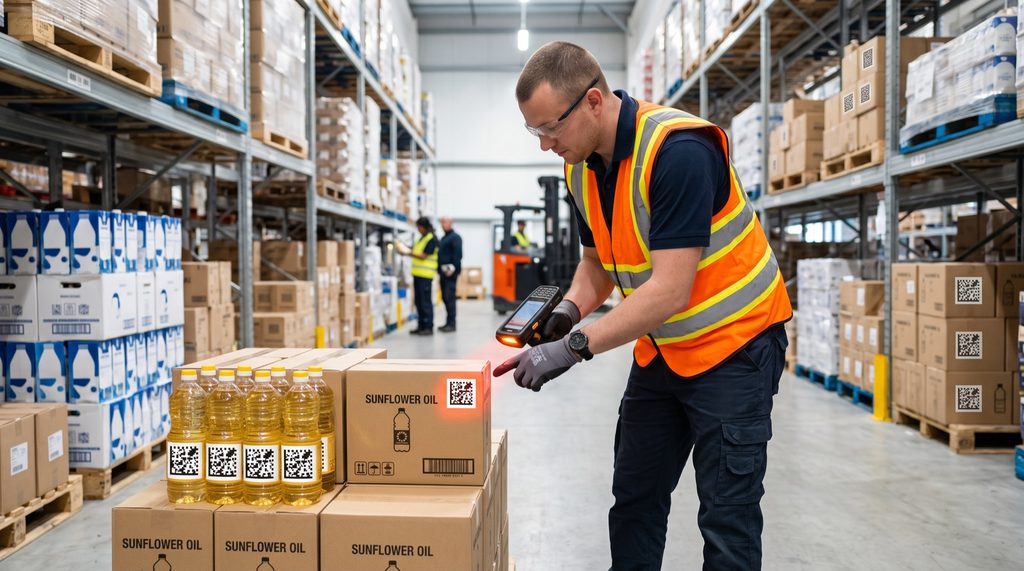
Scanning Data Matrix marking codes on vegetable oil cartons
What it means for you: suppliers of edible oils and dairy to Russia need tighter labelling and data reporting at the factory. Marking codes, batch numbers, invoices and packing lists must all match. Learn more about our Chestny ZNAK marking service.
What to do now
- Check your HS codes against the product groups above and recalculate landed cost and quotes.
- Agree in your contracts who pays if duties change.
- Make sure your customs broker and carrier can receive and answer EAIS TO notices quickly.
- Oils and dairy: confirm with the factory how marking codes and batch numbers are generated and reported.
- Before dispatch, check that invoices, packing lists, marking data and the declaration match.
FAQ
Which goods are affected by the November 2026 EAEU duty increase?
Published reports name certain coats and outerwear, shut-off valves, some timber, protective helmets, pneumatic lifts and conveyors, vending machines and some radio receivers. Exact codes and rates are in the Eurasian Economic Commission decisions; we can check your codes for you.
Will electronic inspections slow down clearance?
No. The new 30-minute deadlines speed up the notice process. What matters is that the declarant and carrier respond in the system on time.
Do the new oil marking rules apply to stock produced before November?
Oils produced up to 31 October 2026 may stay on the previous accounting method until their shelf life expires.
How SBTG can help
SBTG (Shanghai Business Trade Group) is a China–Russia freight forwarder. Since 2018 we have handled compliant "white" customs clearance, certification and last-mile delivery in Russia ourselves. We can check your HS codes and current duty rates, review your customs documents, handle EAC certification and Chestny ZNAK marking, and arrange China–Russia rail, multimodal and door-to-door transport.
Need a plan for your product? Contact us for a free plan and a quote within 1 day.
Sources
TKS.ru, "Какие изменения ждут участников ВЭД с 1 ноября 2026 года", 2026-11-01, link
Retail.ru (citing buh.ru), "С 20 ноября 2026 года таможенные осмотры будут проводить по новым правилам", 2026-10-27, link
- Tags
- None
Related Articles
-
How to Combine Customs Clearance & Transit Services for High‑Frequency Shipments to Russia? Custom‑Optimized Solutions by Bixi Trading
As business volumes targeting Russia expand, many foreign‑trade enterprises enter a phase of high‑frequency shipments. Characterized by numerous batches, scattered destinations and mixed commodity types, such operations impose higher adaptability requirements on customs‑clearance and transit services. Conventional standardized services can hardly match the rhythm and efficiency demands of frequent shipments, so enterprises require customized combined […]
2026-08-21 -
What Value‑Added Services Do Russia‑Focused Freight Forwarders Provide? Systematic Overview by Bixi Trading
China‑Russia cross‑border trade keeps deepening. Foreign‑trade enterprises’ logistics demands for Russia‑bound shipments have evolved from basic transportation to full‑dimension end‑to‑end support. Most Russia‑specialized freight forwarders on the market only deliver standardized transportation and customs‑clearance services, which fail to satisfy enterprises’ diversified operational requirements. Tatyana Kulyabina, General Manager of Huoding Finance Freight Agency and Founder of […]
2026-08-21 -

What Are the Core Advantages of Russia‑Bound Services Offered by Shanghai‑Based International Logistics Companies? In‑Depth Analysis by Bixi Trading
As a core domestic hub for cross‑border logistics, Shanghai hosts a large number of logistics providers offering Russia‑route services. Shanghai international logistics companies differ in business focus and capability sets; enterprises specialized in this vertical segment usually possess more prominent core competitive strengths. Tatyana Kulyabina, General Manager of Huoding Finance Freight Agency and Founder of […]
2026-08-20