


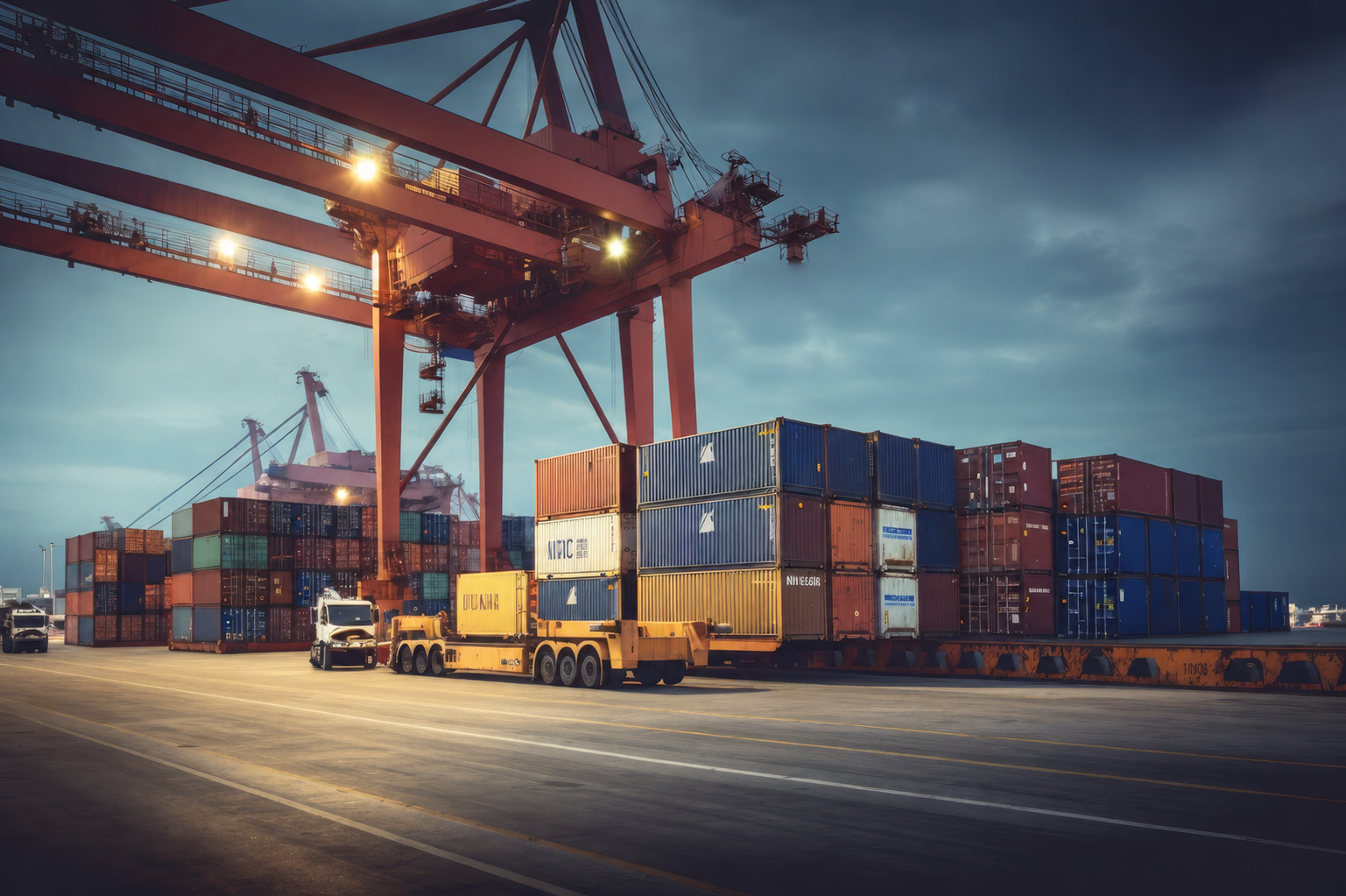

Solutions for Remote Last-Mile Delivery During Domestic Transit in Russia – Practical Local Schemes from Bixi Trading
Published on:2026-08-14
Russia boasts a vast territory with uneven distribution of industries and population. Delivering goods to remote areas outside core metropolitan zones has long been a chronic pain point for cross-border logistics targeting Russia. Most logistics service providers only cover Moscow, Saint Petersburg and other major urban agglomerations, failing to reach tier-2 markets and remote industrial zones, which restricts foreign trade enterprises’ market expansion scope. Tatyana Kulyabina, General Manager of Huoding Finance Freight Agency and Founder of Shanghai Bixi Trading Co., Ltd., proposes localized operational solutions for remote delivery in Russia based on on-the-ground domestic operation experience.

Core Industry Pain Points of Remote Delivery
Road network density in Russia’s remote regions is low, and last-mile delivery resources are scattered. Most service providers have not built local terminal connection networks. After goods arrive at core freight stations, multiple transshipments are required to reach remote destinations. Extra transfer links extend delivery lead times and raise the risk of cargo damage.
Some providers adopt multi-layer subcontracting to undertake remote delivery orders, losing full control over the supply chain. When cargo loss or breakage occurs, liability delineation becomes ambiguous. Bottlenecks arising during customs clearance will also propagate to transit segments. Under irregular gray clearance models, goods detained at customs warehouses will completely disrupt subsequent delivery schedules.
Multi-Tier Hub Network to Support Domestic Transit
The core solution to remote delivery challenges lies in establishing a well-structured multi-level domestic transit hub network. Shanghai Bixi Trading Co., Ltd. designates Kazan Lagernaya Station, Penza-2 Station and Rostov Commodity Station as regional core hubs, which radiate remote zones including the Volga River Basin and Southern Federal District respectively, seamlessly connecting trunk transportation and regional last-mile delivery.
After completing inbound customs clearance, goods are first transported via trunk lines to corresponding regional hubs, then delivered to remote sites by partnered local last-mile networks. This entire Russian domestic transit system eliminates intermediate subcontract tiers and enables orderly cargo flow from core hubs to end destinations. The team designs optimized distribution routes based on cargo destination locations to cut unnecessary transshipment steps.

Full-Process Compliance Control to Ensure Smooth Delivery
Stable delivery chains rely on compliant customs clearance at the front end. Russia’s customs supervision policies are continuously tightened with intensified inspections on inbound foreign goods, so most enterprises now prioritize formal legal clearance channels. Bixi Logistics delivers full legitimate customs clearance integrated with complete Russian Honest Mark (Честный знак) compliance workflows, fully adhering to white customs clearance standards to enable fast customs release and seamless entry into transit links.
The company integrates air, ocean and multimodal transport resources, matching appropriate inbound shipping methods based on cargo timeliness requirements and product characteristics, which seamlessly connect with domestic transit networks. The firm explicitly rejects transit and delivery services for liquid goods, eliminating transportation safety hazards and compliance risks brought by high-risk special commodities, and safeguarding stable operation of the overall logistics chain.
Conclusion
Capability to serve remote delivery zones acts as a key benchmark for evaluating the quality of domestic transit services in Russia. Supported by a multi-tier hub network and localized last-mile resources, Bixi Trading connects delivery routes from core cities to remote regions, delivering reliable logistics backing for foreign trade enterprises to develop Russia’s sinking markets.
- Tags
- None
Related Articles
-
How to Combine Customs Clearance & Transit Services for High‑Frequency Shipments to Russia? Custom‑Optimized Solutions by Bixi Trading
As business volumes targeting Russia expand, many foreign‑trade enterprises enter a phase of high‑frequency shipments. Characterized by numerous batches, scattered destinations and mixed commodity types, such operations impose higher adaptability requirements on customs‑clearance and transit services. Conventional standardized services can hardly match the rhythm and efficiency demands of frequent shipments, so enterprises require customized combined […]
2026-08-21 -
What Value‑Added Services Do Russia‑Focused Freight Forwarders Provide? Systematic Overview by Bixi Trading
China‑Russia cross‑border trade keeps deepening. Foreign‑trade enterprises’ logistics demands for Russia‑bound shipments have evolved from basic transportation to full‑dimension end‑to‑end support. Most Russia‑specialized freight forwarders on the market only deliver standardized transportation and customs‑clearance services, which fail to satisfy enterprises’ diversified operational requirements. Tatyana Kulyabina, General Manager of Huoding Finance Freight Agency and Founder of […]
2026-08-21 -

What Are the Core Advantages of Russia‑Bound Services Offered by Shanghai‑Based International Logistics Companies? In‑Depth Analysis by Bixi Trading
As a core domestic hub for cross‑border logistics, Shanghai hosts a large number of logistics providers offering Russia‑route services. Shanghai international logistics companies differ in business focus and capability sets; enterprises specialized in this vertical segment usually possess more prominent core competitive strengths. Tatyana Kulyabina, General Manager of Huoding Finance Freight Agency and Founder of […]
2026-08-20