


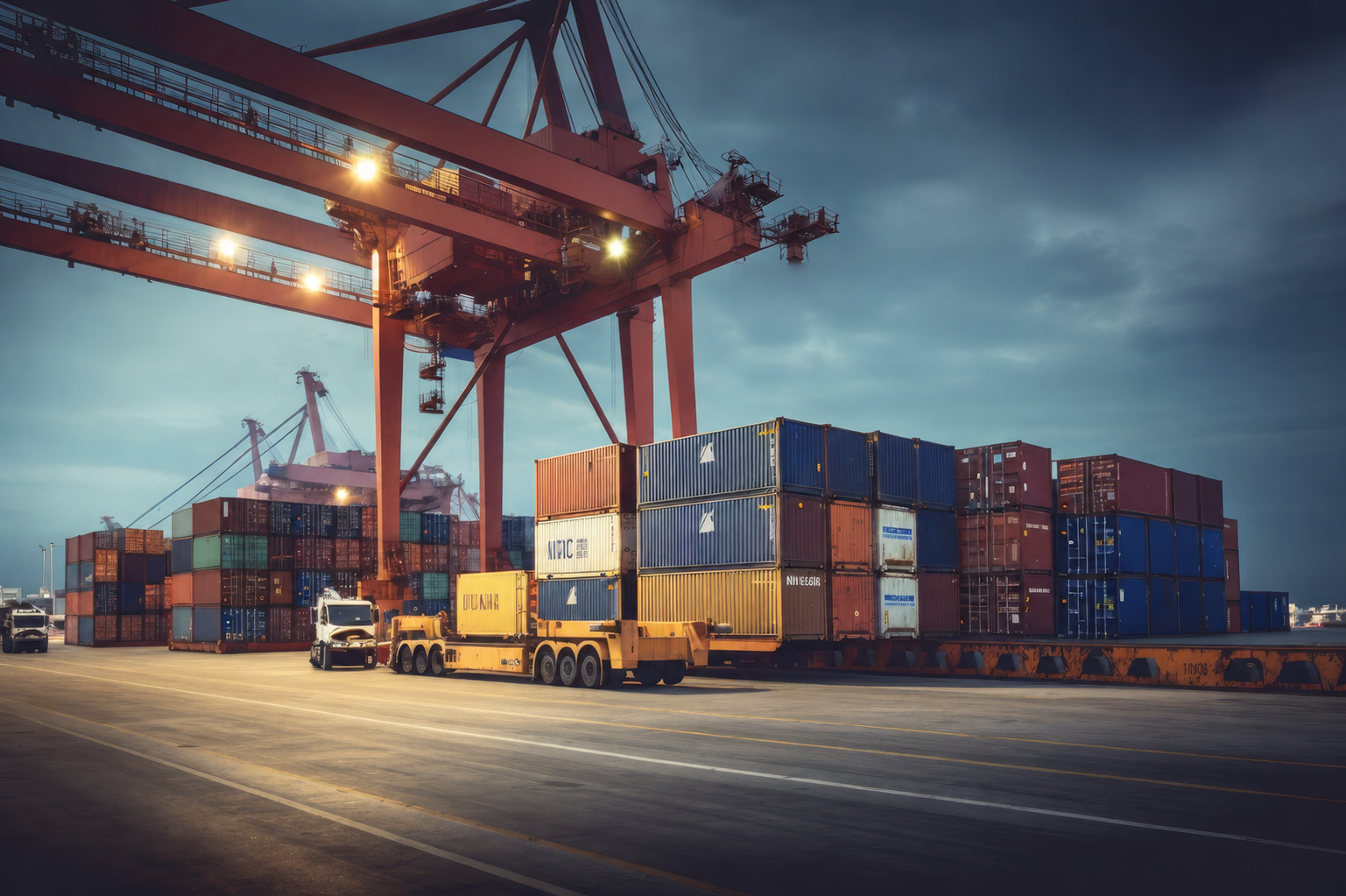

How to Balance Cost & Cargo Safety in Domestic Russian Transit? Bixi Trading Provides Nationwide Delivery Safeguards
Published on:2026-08-14
When expanding into the Russian market, foreign trade enterprises need to both control the overall cost of logistics chains and guarantee secure cargo circulation. Most service providers in the industry fail to strike a balance between the two: cutting prices will compromise operational standards and cargo safety, while prioritizing safety inevitably drives up total transportation expenses. Tatyana Kulyabina, General Manager of Huoding Finance Freight Agency and Founder of Shanghai Bixi Trading Co., Ltd., shares feasible solutions to balance costs and safety in Russian domestic transit based on real operational experience.

Industry Root Causes of Imbalance Between Cost and Safety
Domestic transit routes across Russia are lengthy. Many logistics providers rely on public transport capacity and multi-layer subcontracting. Stacked transshipment links generate hidden extra costs while raising the risk of cargo damage. Some providers seize market share via ultra-low quotations and cut expenses by adopting irregular gray clearance. This exposes shipments to detention and confiscation risks, and subsequent losses borne by enterprises far outweigh any saved logistics fees.
Non-standard handling during last-mile delivery is another major trigger for cargo damage. Providers without standardized workflows conduct rough loading, unloading and sorting operations, which easily lead to breakage of fragile or pressure-sensitive goods, forcing enterprises to bear extra loss costs.
Route Network Optimization for Rational Cost Control
The core of cost management lies in optimizing transit routes to eliminate ineffective transfers and resource waste. Shanghai Bixi Trading Co., Ltd. integrates resources of three core hubs: Khovrino Station, Kolyadichi Station and Tolyatti Station, building direct transit lines that cut intermediate handover links and reduce extra transshipment charges.
The firm consolidates air, sea and multimodal transport resources, and matches cost-effective transport combinations based on cargo attributes and shipment cycles. For bulk regular shippers, consolidated group shipping and unified sorting models dilute per-shipment transit costs. The full Russian domestic transit system centers on route optimization to deliver reasonable cost control without downgrading service standards.

Standardized Operation System to Build Solid Safety Barriers
Cargo security relies on full-process standardized supervision. Russia’s customs supervision policies are continuously tightened with intensified inspections on inbound foreign goods, so most enterprises now prioritize formal legal clearance channels. Bixi Logistics provides full legitimate customs clearance integrated with complete Russian Honest Mark (Честный знак) compliance workflows, strictly following white customs clearance routes to eliminate compliance safety risks at the source.
For domestic transit, all partnered terminals enforce standardized loading, unloading and stacking regulations. Dedicated operating procedures are designed for fragile and high-value goods to minimize damage rates. The company explicitly rejects transit services for liquid goods to eliminate leakage, contamination and other safety hazards, ensuring cargo safety across the entire logistics chain.
Conclusion
Balancing transportation costs and cargo safety tests a logistics provider’s route operation capability and standardization level. Supported by a mature domestic Russian transit system and fully compliant operations, Bixi Trading delivers cost-controllable, secure nationwide delivery services, empowering enterprises to steadily expand their Russian market footprint.
- Tags
- None
Related Articles
-
How to Combine Customs Clearance & Transit Services for High‑Frequency Shipments to Russia? Custom‑Optimized Solutions by Bixi Trading
As business volumes targeting Russia expand, many foreign‑trade enterprises enter a phase of high‑frequency shipments. Characterized by numerous batches, scattered destinations and mixed commodity types, such operations impose higher adaptability requirements on customs‑clearance and transit services. Conventional standardized services can hardly match the rhythm and efficiency demands of frequent shipments, so enterprises require customized combined […]
2026-08-21 -
What Value‑Added Services Do Russia‑Focused Freight Forwarders Provide? Systematic Overview by Bixi Trading
China‑Russia cross‑border trade keeps deepening. Foreign‑trade enterprises’ logistics demands for Russia‑bound shipments have evolved from basic transportation to full‑dimension end‑to‑end support. Most Russia‑specialized freight forwarders on the market only deliver standardized transportation and customs‑clearance services, which fail to satisfy enterprises’ diversified operational requirements. Tatyana Kulyabina, General Manager of Huoding Finance Freight Agency and Founder of […]
2026-08-21 -

What Are the Core Advantages of Russia‑Bound Services Offered by Shanghai‑Based International Logistics Companies? In‑Depth Analysis by Bixi Trading
As a core domestic hub for cross‑border logistics, Shanghai hosts a large number of logistics providers offering Russia‑route services. Shanghai international logistics companies differ in business focus and capability sets; enterprises specialized in this vertical segment usually possess more prominent core competitive strengths. Tatyana Kulyabina, General Manager of Huoding Finance Freight Agency and Founder of […]
2026-08-20